



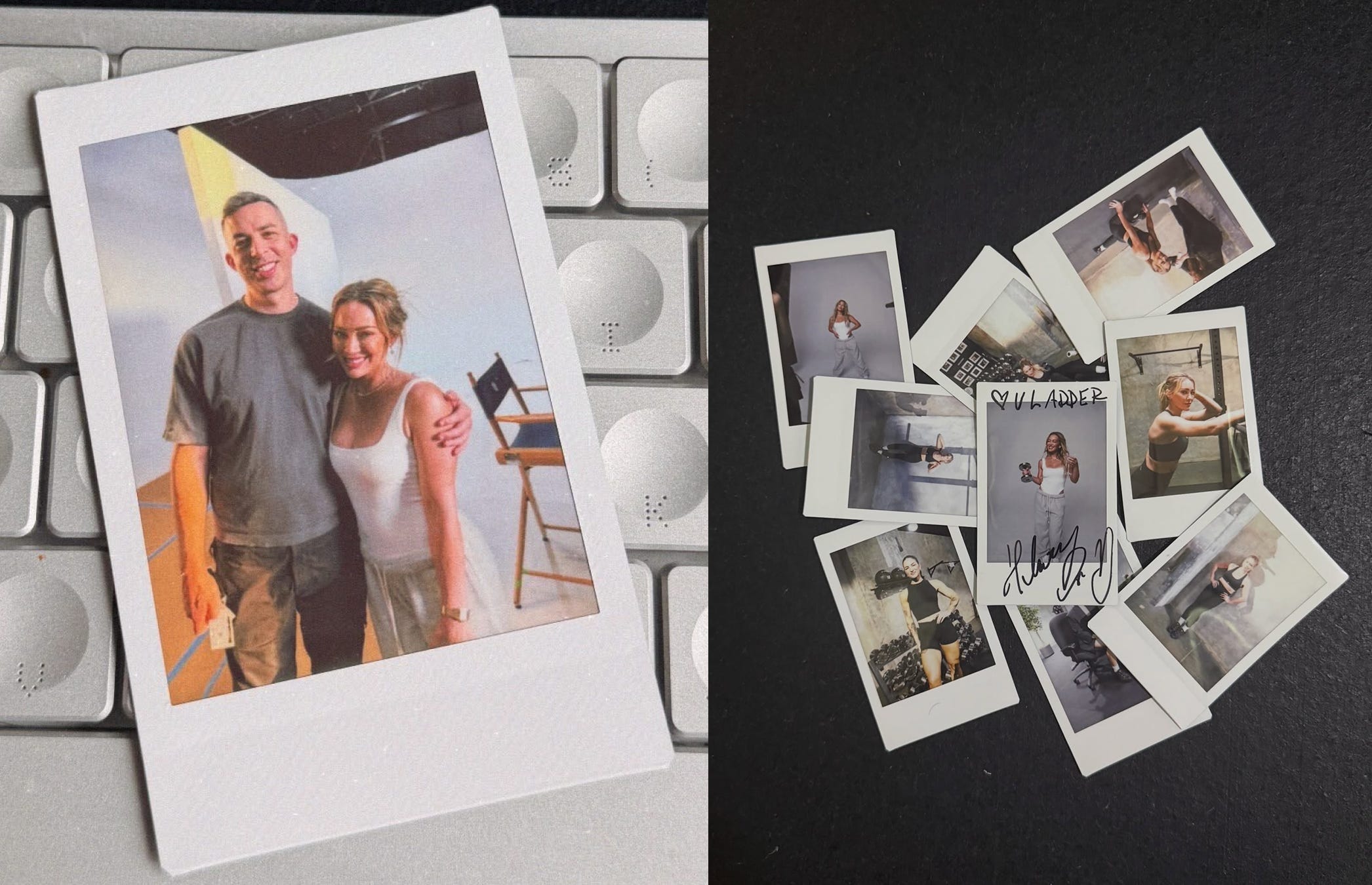
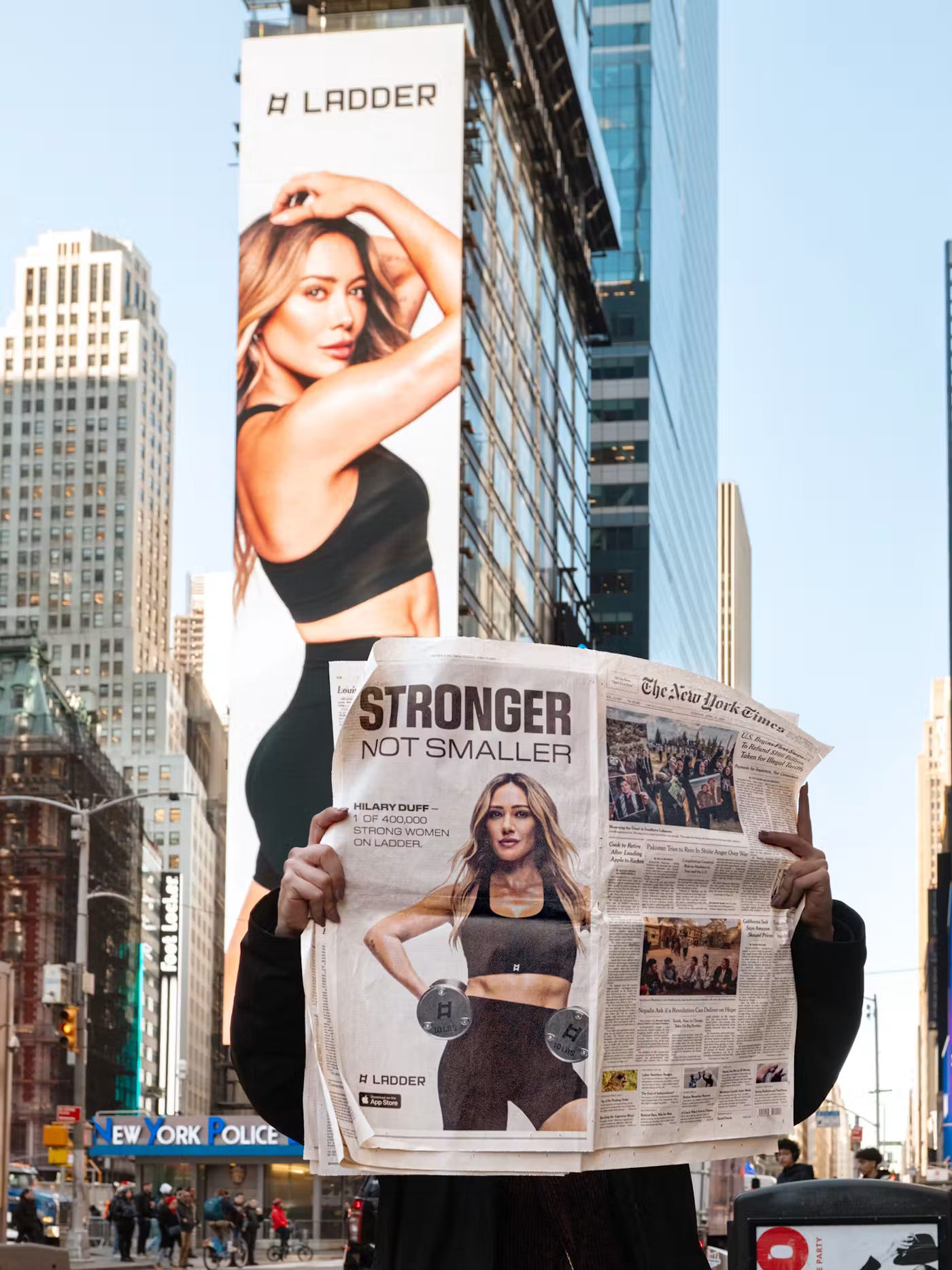
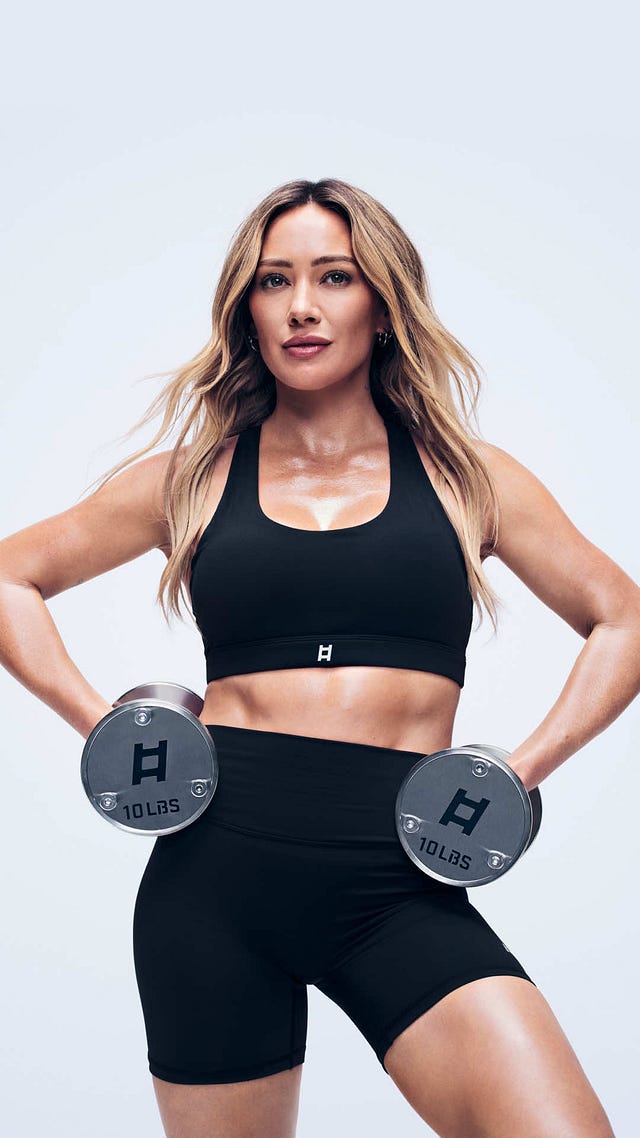
When Ladder put Hilary Duff on the back page of The New York Times with three words, Stronger, Not Smaller, the campaign quickly grew bigger than both of them. Within days it was all over the Time 100 red carpet, TheSkimm, ESPN and creators’ feeds.
We sat down with Philip Edsel, who helped build Ladder’s short-form growth engine, to talk about what it takes to make a big swing last. He covered licensing everything you can, planning for the luck you can’t control, and giving culture an idea it can make its own. It turns out the work and the luck can’t be pulled apart. Here’s how they pulled it off.
—
Philip Edsel: I think the interesting thing about this campaign is it has so many more layers than I think most of the marketing talking heads that have covered this have really, you know, understood, I think.
And yeah, I mean, it’s been fundamentally game-changing for our business. Which was already doing well, but now, you know, things are really, really exciting.
And it was kind of birthed out of a problem we had, which was, the business is doing really well, we’re growing really well, and we built this really incredible growth engine on short form, but we realized our mainstream awareness, our cultural awareness, was lacking and sort of crossed the chasm.
And there are only a handful of ways to go and really tackle that, and celebrity is one of them.
And I’m not a big fan of celebrity as a strategy, but sometimes if you can find the right person, it’s really effective.
Tatum Brandt: I remember talking to you, maybe it’s been about a year ago now, about how you needed more brand awareness around Ladder.
Now you’ve done the ‘curse’ of doing such a good job with your coaches and having them bolster the brand, that you’re like, okay, next task is to increase Ladder’s brand recognition.
Mackenzie Ludwig: Which, oh my God, you guys, you succeeded.
Philip Edsel: Hopefully, yeah, hopefully it’s still, you know, up and to the right.
When I came on at Ladder, our CEO and I got together and basically we decided our bet was trying to figure out and crack the code on TikTok organic. This was in 2021-2022, which, you know, feels like not that long ago, but was still the Wild West days of TikTok.
But, thankfully we did that, because it was basically the whole story of how Ladder became the thing it is now, because of the growth engine we built on top of that with our coaches and our creator program.
We built such an impressive, or such an effective, short form growth engine with TikTok and Instagram and the ads that we run on them, and now we’re growing because we’re penetrating a very specific niche. So, now we’ve penetrated a very specific niche and it’s grown the business, but we need to hit the sort of zeitgeist and cultural conversation stuff.
Tatum Brandt: So I kind of wanted to get a little nitty gritty and talk about when you’re planning your campaigns.
We’re looking specifically at 2026, how did you find the narrative that you thought would break through into the bigger culture? Then later with, “Stronger, Not Smaller,” which also aligns with the goals that you’re trying to achieve.
Philip Edsel: Yeah, so it was interesting. The first campaign we were kind of going for the typical Skims ‘everybody’s wearing xyz’, you know, ‘Hillary Duff trains on Ladder’.
And that was the headline because, honestly, what we were solving for was awareness.
On the day we launched the campaign, we also did a full spread on the back page of the New York Times. With those ads, sometimes you want to take a little bit more of a stance or have a little bit more of a POV because of the audience that’s seeing it.
So, it’s a little bit of a different platform with different messaging, and we thought, okay, cool, let’s come up with something that feels a little bit more punchy.
That’s where “Stronger Not Smaller” came from.
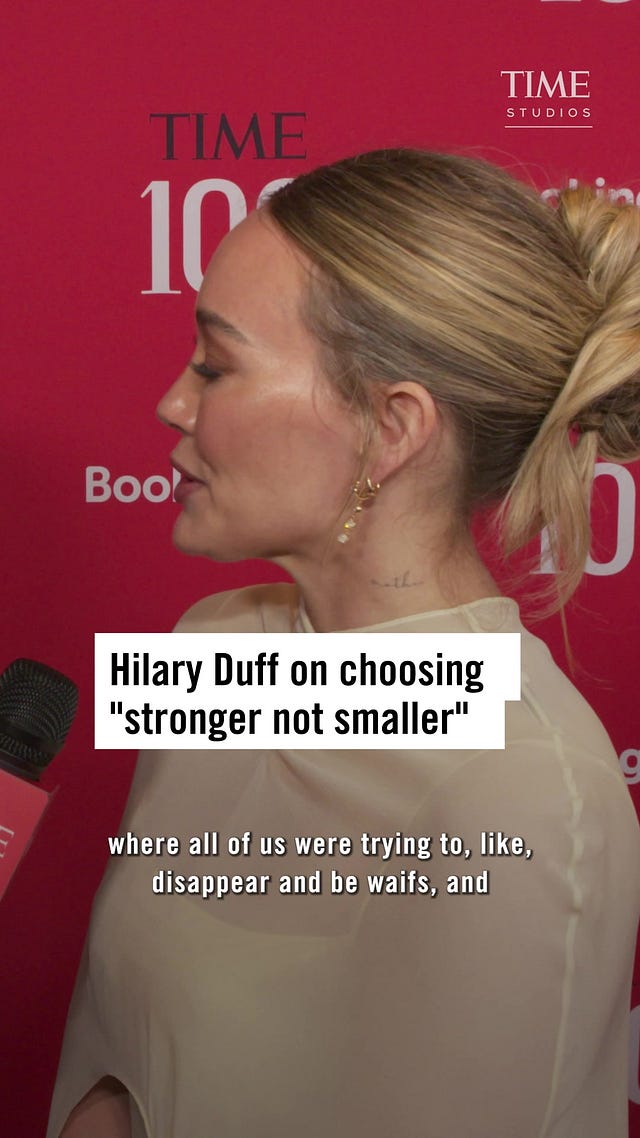
Philip Edsel: What’s funny about the whole thing is it just so happened that Hillary on the launch day was in New York for a Time 100 event. And there was a Times journalist on the red carpet that just so happened to be a Ladder member and saw the campaign. And the first question she had for Hillary was about the campaign, and how “Stronger Not Smaller” is such a powerful message.
 Tiktok failed to load.
Enable 3rd party cookies or use another browser
That video of her response, which was incredible because Hillary is amazing, just went crazy viral. Like, TheSkimm, ESPN women, BuzzFeed, they all picked it up.
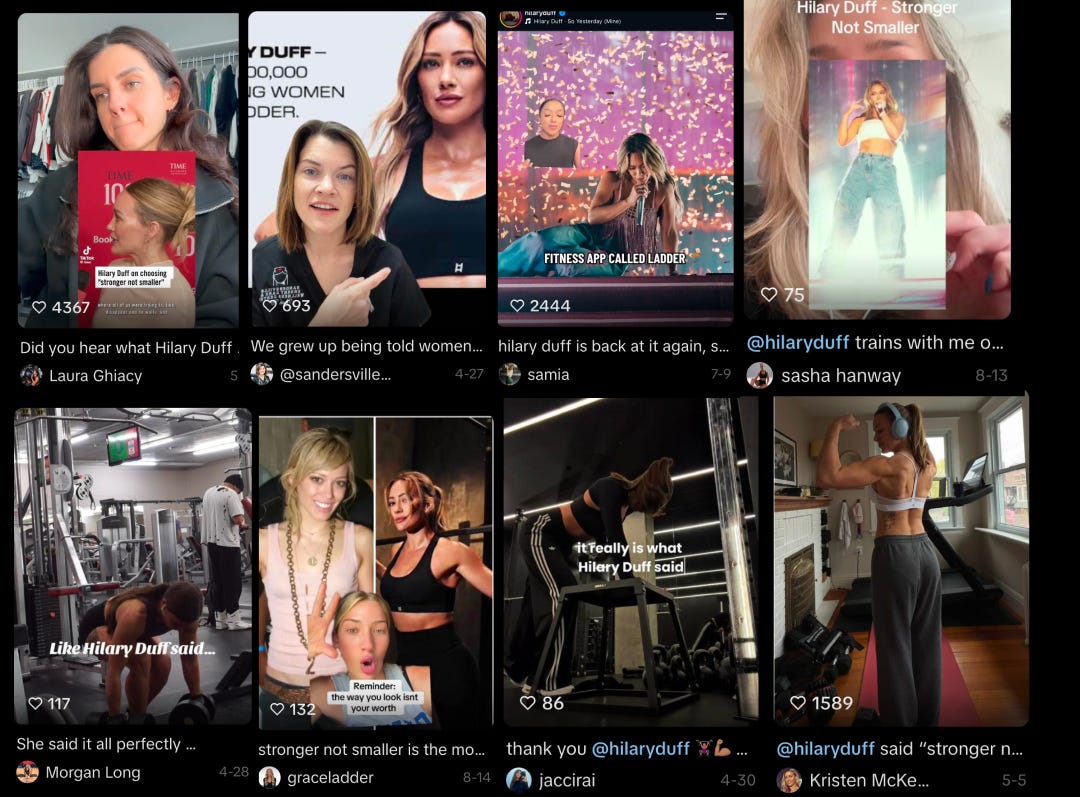
And we had a lot of creators that were responding to the message and making it their own, but when that went viral, it became a hook in and of itself, or created a platform for people to talk about how they feel about that message.
And it became way bigger than just Ladder and Hillary Duff. Although, thankfully, we were the ones sort of creating that platform.
Tatum Brandt: We were wondering, okay, how manufactured was the campaign from beginning to end, versus, oh, this just happened? Because I feel like some legacy brands you see get these giant celebrity or athlete names, but the campaign doesn’t have a super long shelf life.
You just see the big name, it’s flashy, and you can kind of fumble the bag. And especially since this is Ladder’s first, I mean, real big swing with a big celebrity.
So, you know, number one, how do you kind of manufacture a campaign that will get that groundswell of UGC that will carry it to the triple viral?
Is that anything you can control, or was that a thought?
Philip Edsel: Oh, absolutely. I want to say it’s equal parts work and luck. The luck is definitely a part of it, but we set ourselves up so strategically to capitalize on anything that might happen.
However, there was a lot of luck involved.
I thought, when you go to pitch a celebrity, you send them the creative, and they’re like, oh, I love this or I don’t. And it’s not that at all. It’s that the agents and the managers don’t even present that to the person until they get a number that is worth their time.
Mackenzie Ludwig: So honestly, you’re taking a massive risk because you don’t know that creatively you’re aligned.
Philip Edsel: You also don’t know that your concept, that maybe only works for this one celebrity, is even going to be the concept that makes it to the actual end.
So, you’re taking a massive risk–really hoping that things go well and that they’re a good partner or that they agree with your creative, and that they’re a good partner that’s willing to go above and beyond sort of just the logo slap.
 Tiktok failed to load.
Enable 3rd party cookies or use another browser
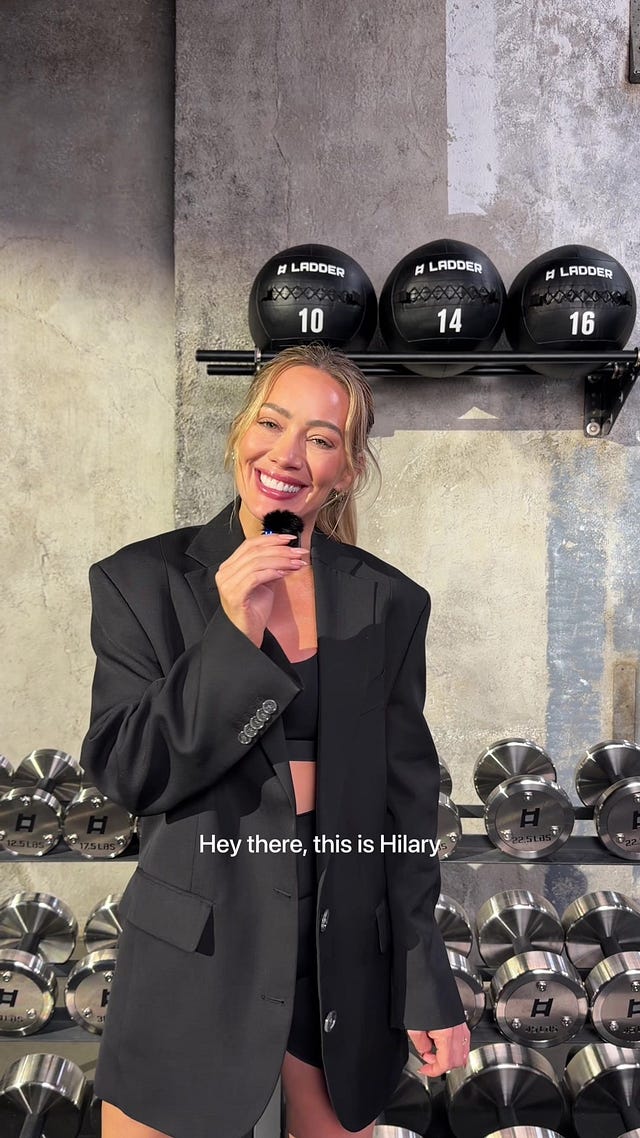
I want to say [Hilary] is a great partner. The lucky thing was, we knew when we were doing the contract that she had a record coming out, there was going to be a tour, which sounds awesome.
And in our minds, it’s okay, not only do we have a campaign, but, every time there’s a tour stop, let’s go run pop-ups and interviews outside the venue or, you know, so we were going to be there and there was additional stuff that we knew was going to happen.
But there was a plan to extend the shelf life, which you have to have. But, we didn’t know that she was going to do the press tour of all press tours on Call Her Daddy, on the cover of Glamour, on the cover of Sports Illustrated, until after we had signed the contract, which was a godsend.
Yeah, you know, all the other things that kind of happened along the way that have just been incredible, and were just sort of the luck piece of it all.
And so, that’s why I say now we’re thinking: okay, we figured out sort of how to arbitrage celebrity a little bit because we found the celebrity that sort of ascended normal fame and broke into the actual cultural conversation.
 Tiktok failed to load.
Enable 3rd party cookies or use another browser
Philip Edsel: The problem is, the reason celebrity is not a great strategy is, the list of people that can do that is so small and it’s really hard to know who will be able to [succeed].
Tatum Brandt: That’s kind of the magic of what you do anyway–beyond celebrity is a good deal of luck, but you have to set yourself up to have all the cards in the right place for when you strike that lucky thing.
So you’re looking at culture, you knew nostalgia was trending, you knew certain things were taking off on socials, so you could kind of place a safe bet that that would do pretty well culturally.
Tatum Brandt: My other question for you, is how do you think about all the channels that go around as you’re trying to say, okay, we want to extend the shelf life of this campaign?
You’ve got the boots on the ground around her core [tour] stops. You guys have mastered the short form viral strategy.
So, what is your perspective or how do you look at all the different channels that connect to a campaign?
Philip Edsel: If you’re going to write that check, you better have everything you can licensed.
Like, if you can only use it on social for X amount of time, it just makes it a really, really tough sell to extend it.
Hopefully it has a bigger life, which ended up happening [with the Hilary campaign]. But, we know the initial post will do pretty well.
But we got really excited about TV and CTV, and every piece of creative that we launch–you’ve already made it just throw it up on TV.
Tatum Brandt: Has it been working for you?
Philip Edsel: Yeah, it’s been awesome.
We’ve already done the production, so let’s just find a new channel to share it. And it’s a totally different audience than the people that were hitting on TikTok or Instagram.
The [in-person marketing] was a big one, too. We knew when she got announced as the Sports Illustrated swim cover and that she was going to be going to Miami for Swim Week, we were like, all right, let’s talk to Swim Week.
They’re not creative about how they partner, so we thought, that doesn’t seem that really exciting. But, what if we just took over every bus stop in Miami and South Beach?
And what if we hired a street team to go chalk the ground and put up posters? And we just did street interviews, which we ended up going down there and doing.
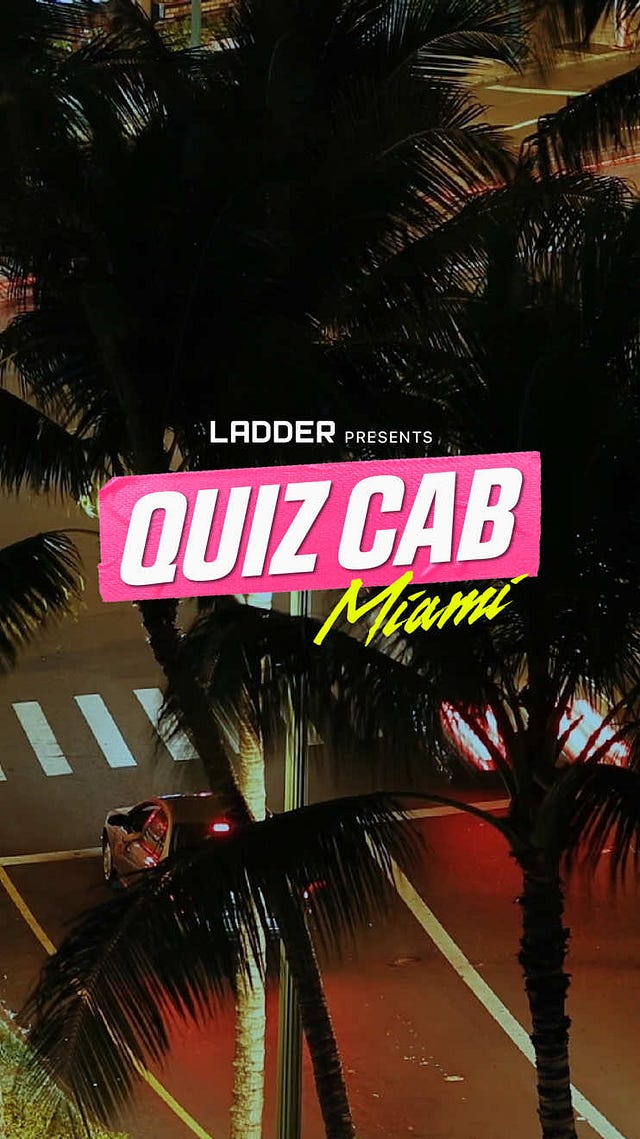
It was three of us. We wrapped a vehicle and we called the whole activation ‘Strong Girl Summer’, which is kind of the tie-in to Stronger Not Smaller and everything was pink.
We had an aerial banner and LED boats that floated down South Beach with Hillary on it.
And my favorite thing that we did was wrapping a tricked out Escalade that had lasers and stuff on the inside, and we hired Ben Bailey, who was the original host of Cash Cab, and we literally picked up people that were coming out of shows.


We got them into the car and we basically just drove around a little bit and we asked some questions around progressive overload, the benefits of strength training beyond aesthetics, and a lot of strength training stuff.
And then ultimately asked them, what does “stronger, not smaller” mean to you? And we got incredible soundbites. So, all that to say, the way that we licensed Hilary’s content and the usage rights that we got out of it helped us extend that life because we could go throw up bus stops and whatever else.
 Tiktok failed to load.
Enable 3rd party cookies or use another browser
Last week, she played a sold out MSG for two nights, and we had a domination around the stadium, which was, essentially, all the ground ad signs.
And then, they call it the spectacular, the giant LED wall.
Tatum Brandt: And that thing went viral.
Philip Edsel: And, then you go read the comments, and they’re all insanely positive.
It’s amazing. I’ve been doing this for, you know, 20 weeks now or whatever, and that’s better testimonial proof than anything we can do.
Tatum Brandt: Yeah, it’s been like a huge smash. I feel like you have had so many smash hits that feel like luck, but it’s because you set yourself up to take full advantage of luck when it hits.
Philip Edsel: It’s strategic. Yeah, that’s always the, you know, I feel like that’s every podcast question—is it hard work or is it luck?
And I’m like, you can’t separate the two, you know, like you have to do the hard work and then you have to have some element of luck for it to actually go the way that you really want it to.
So, thankfully we’ve got both.
Tatum Brandt: You’ve got the shelf life with the “Stronger, Not Smaller” narrative, too.
Philip Edsel: Yeah, you asked one question about how do we extend the shelf life, and that was kind of my point about giving [the campaign] a tagline that wasn’t even about [only] Hillary, it was just more of an idea that helped extend the reach and the shelf life of the campaign.
—
The biggest lesson from Ladder isn’t about landing a celebrity. It’s that a campaign lasts when it gives people an idea they can make their own. Stronger, Not Smaller spread because women saw themselves in it and took it further than any ad buy could. Ladder got the celebrity, but the idea is what kept the campaign going.
So go do the work, make room for the luck, and give people something worth talking about.
Thank you to Philip and the Ladder team for letting us in on how they did it. We can’t wait to see what they do next.