



Tatum Brandt: I feel like I’ve been following your work for forever.
Zach Litoff: Thank you.
Tatum Brandt: I’m such a mega fan, I would love to hear a little bit more about your background, what got you in [certain doors].
Zach Litoff: I started blending [my college art work] with my personal passions, and that was kind of the start of me starting LitoffStudios. But at the time, my number one priority was trying to run fast in college. Fast forward a few years later, I graduated college and had been working in an agency.
Now, I understand how agencies work, how to pitch yourself, and I understood enough about the numbers where I was like, okay, maybe I could try to freelance.
I still had a lot of friends that were now pro-runners and working in the industry. So, rather than just doing fun drawings of them and hearing about their jobs, they were able to bring me into projects. And at the time, it was all pretty small projects, but it was like, “hey, I’m running a pro race, do you want to come and help?” Or, “hey, we need a t-shirt for this event, can you create something?”
I kind of just continued to ride the wave of, you know, anytime a project will come, go all in on it. And I think not a lot of people are as willing to make content around their work. Not that I’m the best at it, but I feel like I have a good skill of having really solid work and being willing to try and, you know, go the content route. And it’s grown and grown. I feel like it’s still growing, and I’m still figuring out what I want to grow it into. I’m starting to think more long term, but I’m a freelance designer with the added benefit of social media. I love content and love talking about my work, and have deep roots and admiration for running. I feel like that niche has kind of carried me pretty far as well.
Tatum Brandt: Yeah, I can see that. Was there a project or a moment on social or something that happened, that came to you that you were like, oh, this, this could be actually a career path for me?
Zach Litoff: By the time that project came around, I had already jumped into it. I think the first project that, like, made me take it a little bit [more] seriously, was a t-shirt I did for Nike for a run that they were putting on. Knowing now what I know about the industry, that was a very small project and shouldn’t have given me as much confidence as it gave me–but at the time, I was like, “oh, if Nike’s willing to work with me, maybe I could build something with this.” And that gave me enough to keep going. It was also one of my first paid projects that wasn’t a friend, so that was nice.


But then a year later, I did the t-shirts and a full rebrand for Bay Breakers. And that was, I would say, the one where [I felt like I made it].
[Following the post about that race] one of the people who followed me knew the owner of the race and was, like, hey, do you want to come get drinks with me and the owner of the race and we can talk about your ideas?
Tatum Brandt: That’s so cool.
Zach Litoff: So I went to some bar in Marina Tipsy Pig, we got drinks, and I basically said, I want to design your t-shirts. I feel like, like, me being local and in the running world, I could crush it. And I had learned from working in an agency, you make your small pitch, you make a medium pitch, and you make a big pitch. And they almost always take the medium pitch.
MacKenzie Ludwig: But they took the big pitch?
Zach Litoff: Yeah, I was like, you should let me rebrand your entire race. You need a new logo, you need a new website, you need all new assets. [I told them], everything is outdated, and you guys need to revamp. And the owner was like, oh, wow, this kid’s talented, young, and incredibly cheap.
MacKenzie Ludwig: Like, yeah let’s do it!
Zach Litoff: But I think that realizing that if you take yourself a little bit seriously, someone else that has a lot more power will take you twice as seriously. And having the ability to go have a real impact on something made me realize I could probably keep riding this momentum, and see where it goes. And this is where it is now.
MacKenzie Ludwig: That’s awesome.
But I think that realizing that if you take yourself a little bit seriously, someone else that has a lot more power will take you twice as seriously.
Tatum Brandt: Do you have a dream brand you’d want to reach out to you, or to get hired or commissioned for some work? Do you have a favorite type of project to work on? Like, in an ideal world, it’s always a rebrand plus, or?
Zach Litoff: My favorite type of project is one that lets me [have some creative freedom]. Like, those are my favorite projects because, especially if it’s core to something I care about, I don’t really care exactly what type of work it is. I’m always trying to, like, hide my little hidden messages and style–and it’s not some deep agenda, it’s because I love running and happiness. With the Bay Breakers project, I was trying to bring San Francisco together, and this was a race where I felt like the running community and this race really embodied that happiness.
I ran that race every year throughout college, and now I still run it, so it’s been 10 years. So, that [project] meant a lot to me. Same with, like, when I did work for the Boulder Boulder, like, that was an apparel project, but I had pictures of me in a backpack my parents were carrying me in while running it. So, I think what makes me care most about projects is the meaning they have.
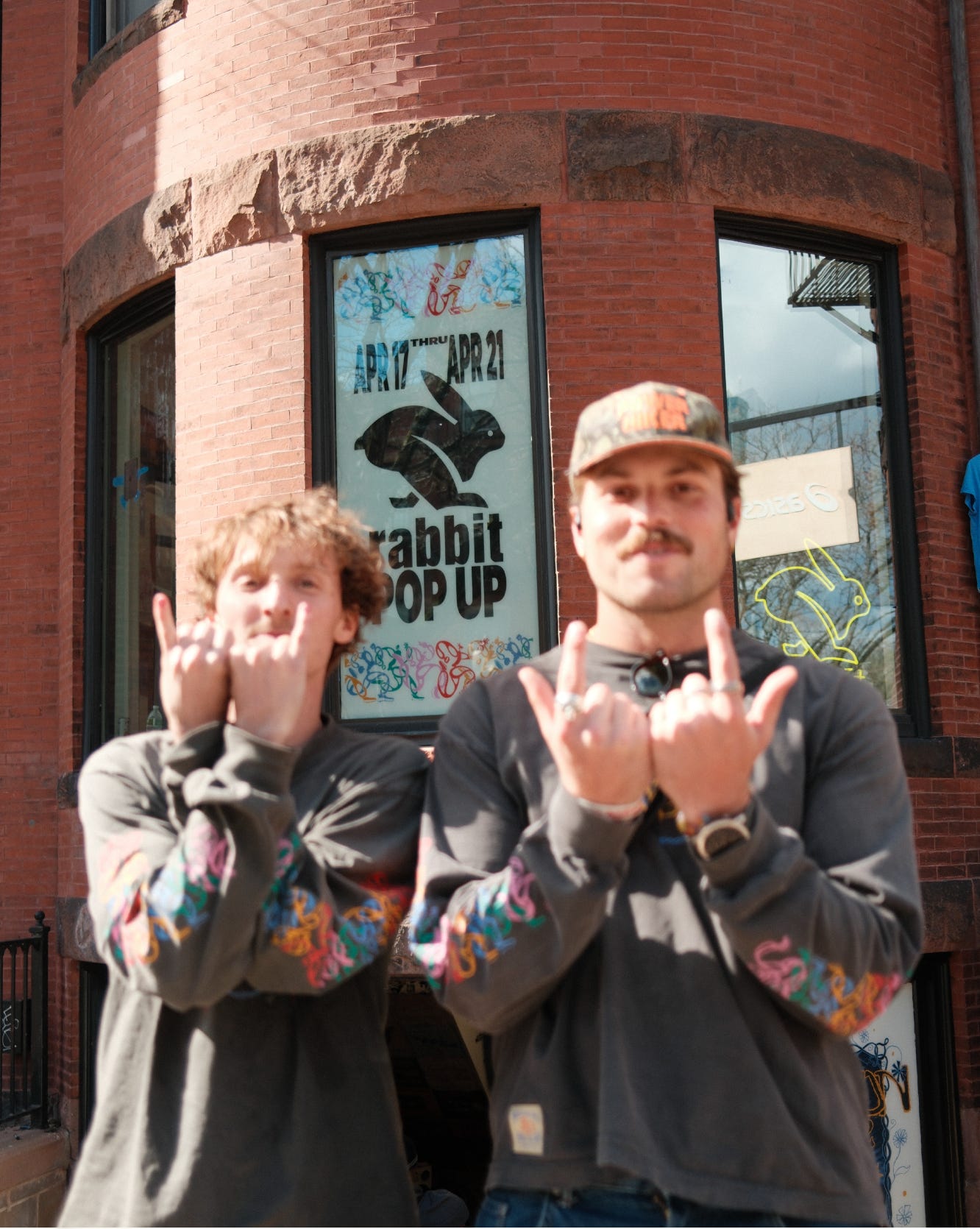
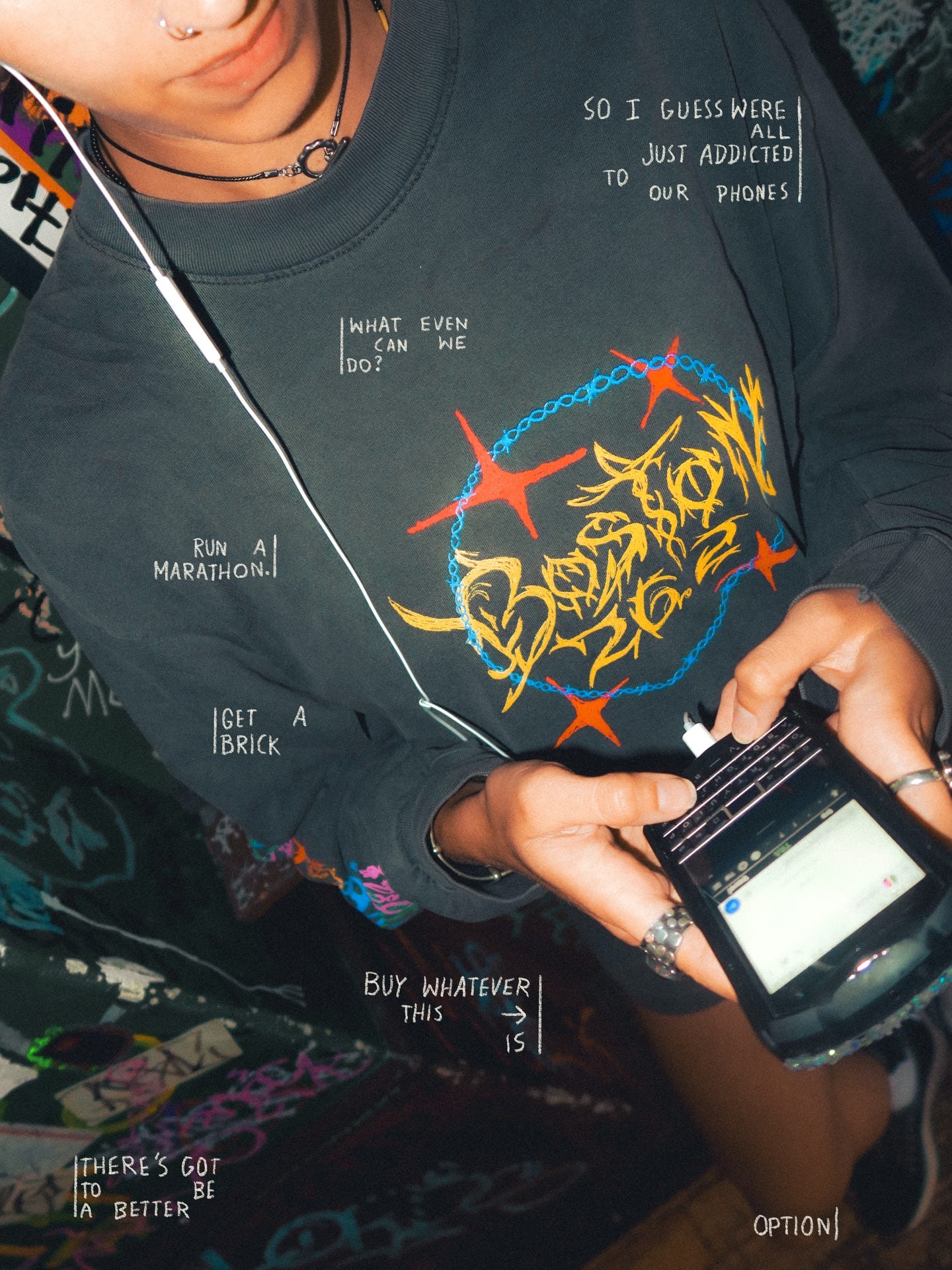
I did a project for the Boston Marathon, too, and that one I remember was awesome. They let me lean into the idea that running is punk, and that it’s this countercultural thing right now and let me get a little bit political.


Zach Litoff: So, if I’m able to feel authentic in the work I’m doing, not just representing the brand 100% of what they want, which sometimes, you know, you gotta do. Like, I’m not going into every brand being, like, let me make my statement. And sometimes they want a shirt, so you make a shirt type of thing. What excites me the most is when they’re interested in what I have to say.
Tatum Brandt: What’s your process like? You know, the classic question you get as an artist. What’s your process like in getting inspiration? Somebody comes to you with a brief and you’re like, okay, how do you find inspiration?
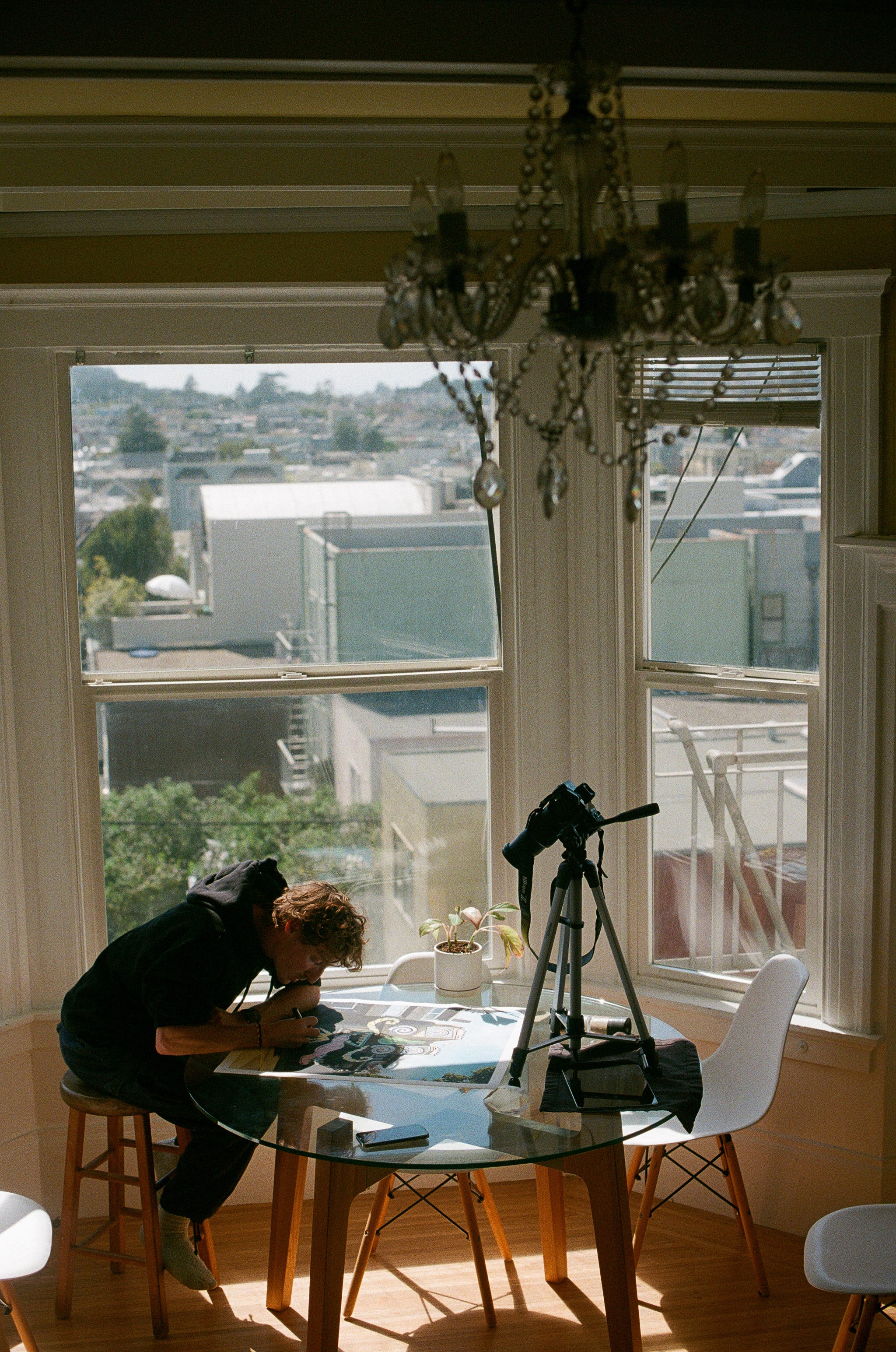
Zach Litoff: I feel like, when I was growing up, it was very much like, everything should start paper and pencil–do your sketches, then go from paper and pencil sketch, now we can go and digitize this and make it into this usable graphic. But, I start digital, and then I go handmade later, ideally. I think like, when you have an iPad in front of you, generally, or any form of technology, you’re not limited. You can work so much quicker when you’re able to double tap to erase, it makes your brain think in a way that it doesn’t when you’re on paper and pencil–thinking more permanently when you have to erase.
Tatum Brandt: The way you described why working digitally first–I haven’t heard somebody describe it that eloquently before that’s exactly it. There’s this quote, where it’s like, ‘create like a child, edit like a scientist’. I feel like being digital lets you do that, because you literally have everything in front of you, can make whatever you want.
Zach Litoff: I feel like I am always trying to gather inspiration. Then, when it comes to the actual project–I hate going into a project without actually having ideas, I try not to come into a project without any ideas. I like having 20-30 jotted down ideas, or half finished ideas, or sketches I’ve started. And then, when a project comes to me, and they want a t-shirt design, I’m like, “I already have like a half finished shirt that I’m going to adapt for this project.”
I have like this like pool of ideas that I can pull from and apply to a project. [This was the process] for the ‘Running is Punk’ for The Boston Marathon. The music I’d been listening to was very 1970s through 80s, like British punk, I’d been researching how that affected their politics, and I’d been deep into this and doing sketches and making things already down that route. I was like, “oh, I kind of already have this done.” A lot of designs I do are like that.
Sometimes, I’ll come into a project and I’m like, “damn, I actually haven’t done anything that fits this problem.” Then I’ll have to do deep research dives, go deep into Pinterest, look through drawings I’ve done in the past [and go from there].
Tatum Brandt: Especially with the Boston Marathon project, if you’re already tuned in to something that’s happening within culture, even if it’s not what the talking heads are all talking about is trending at the moment. Like, okay, collectively we’re all feeling this cultural angst and punk, and because you’re coming from a very authentic inspiration spot, I feel like for a lot of the projects you work on, that’ll make it a little more culturally relevant, because you are inside of the culture of that moment.
MacKenzie Ludwig: Definitely.
Zach Litoff: I just did a project for HYLO that’s coming out now–they’re a sustainable shoe brand. So, that was one where I had ideas and things that were interesting to me, but if we’re going to go sustainable and do this shoe, I’m going to collect materials [for this project]. I was collecting sand from the beach and that was something I hadn’t done before, nor was it a half finished project, but it was like an idea that I wanted to apply to the brand and their mission.
^Litoff Studios for HYLO
Tatum Brandt: I have kind of two different questions. One, in your experience working with brands, how can brands best work with artists or freelancers or people like you? Like what have you found to be the best experiences and work? Is it working with the Nikes or even like Boston?
Zach Litoff: It kind of varies team to team, but the best is when I have one person on their team who’s like a ‘friend’. Like they’re the ones who are [championing] your ideas. They’re like your person on the inside.
Tatum Brandt: Like, believing your vision and are like, I’ll fight for it.
Zach Litoff: They’ll talk to me authentically, they’re almost a translator between what the brand really wants, but also what you really want–and they’re not so high where they only care about the brand, and they’re not your best friend, they’re truly a middle ground communicator.
Tatum Brandt: That’s a really good answer, because especially if someone can communicate to you why the brand said no. Because, most often, you know, I feel like brands are [trying to keep] your vision from be expressed, there’s so many other factors. Like, if limiting factor for this thing we want to do is budget, then you can go away and say, okay, well, here’s a way we can get around that and have the same result. I think that does make a better partnership on all sides because you’re involved in some of the problem solving.
Zach Litoff: It makes a project really successful. Brands, you know, not seeming like they’re only trying to get money out of the project–even though it’s a business and no one would judge them for that–but when they’re also interested in the same things you are it makes it more fun.
Tatum Brandt: So, artists or freelancers in your position–maybe you’re five years ahead of where they are. What advice would you give somebody if they’re trying to work with a Nike or get their work out there?
Zach Litoff: I think it’s different things for different people, which is somewhat a cop-out answer. But I always tell people like you need to hone in the way you’re presenting your work. I think the one thing I would say is make sure whenever you’re posting your work, don’t be afraid to just continue to post and post and post or show and show and show.
The work itself doesn’t actually need to be that good, but the way it’s shared needs to be good. And I think that’s one thing a lot of people miss. If you made a really cool animation, great. If you don’t color match the whites of the background and now it’s flashy and weird, it doesn’t matter–they won’t trust you. But, you also can’t be so nitpicky that you’re not posting your work. Just throw things at the wall.
Tatum Brandt: Yeah, it’s not about the amount of followers, it’s the type of people who are following you.
Zach Litoff: And often, it’s the quiet work of a faceless account that’s on private, that then reaches out to you, and it’s the CMO of running at Nike, or those kinds of company heads.
MacKenzie Ludwig: I feel like the way you speak is, like I said, so humble. But you have worked with Brooks, the Giants, the Super Bowl. So I’m interested in the early days, what did that ramp look like from the smaller races designs and how you ended up making art for the Super Bowl
Zach Litoff: It really is just a staircase of one project to the next. Every big project comes from a connection, and every small project adds validity for them to pitch you. And it’s a tough way, but it’s not like nepo baby type connections. It’s connections where you have to build them and be, like, you know, it takes work, too.
That first Nike project where I described the local run they wanted a t-shirt for, they loved it and brought it up in their team meeting, apparently. And her team thought it was awesome. They probably also were like, “oh my God, you only charge that much?!”
Zach Litoff: Now, I’m doing work with Carlsbad, and now I have an arsenal of: he does race t-shirts, does branding, etc. At the same time, I’m making content and making some of my own multimedia works, and a lot of my contacts are getting promoted and going into bigger roles and their coworkers are seeing my work. That basically leads to how I’d get the bigger Nike projects.
And people don’t understand, I think, a lot of these projects with big brands–it doesn’t always have to be a big project for the brand, for you to present it as a huge project and to gain validity and gain respect from having taken it.
MacKenzie Ludwig: Yeah, that’s great advice.
Tatum Brandt: And, it’s so cheesy and cliche, but it’s that famous quote: “do good work and be nice to people.” Like, people should enjoy working with you.
Zach Litoff: Yeah, people are watching, and the industry is so small and circular. So if you work with one rep at Nike, then you don’t know who’s watching.
Thank you, Zach! Follow Zach’s work @litoffstudios, purchase merch on his website here, and HIRE HIM FOR YOUR NEXT PROJECT here!
Thanks for having me!!! thanks for taking me twice as seriously :)