


Welcome back,
It’s been… a minute.
Somewhere between the endless Zoom calls, client projects, and the occasional spiral about my own competence (hi, Dunning–Kruger effect), my publishing rhythm here flatlined.
While I’ve been in my Zoom-call stupor, I’ve had some genuinely great conversations, mostly with folks orbiting the fitness and wellness industry. In these conversations I’ve realized it feels like a miss to talk about branding so much without acknowledging the role of the personal brand.
So many of you building businesses are likely well aware of this as you might have tried yourself to create “founder-led content” or develop a personal “brand” to accomplish your next career goal - whether that be launching a startup or climbing the corporate ranks.
It’s really cringe, isn’t it?
It’s also a ton of fun.
And you tend to sit somewhere between those two emotional states at any given point.
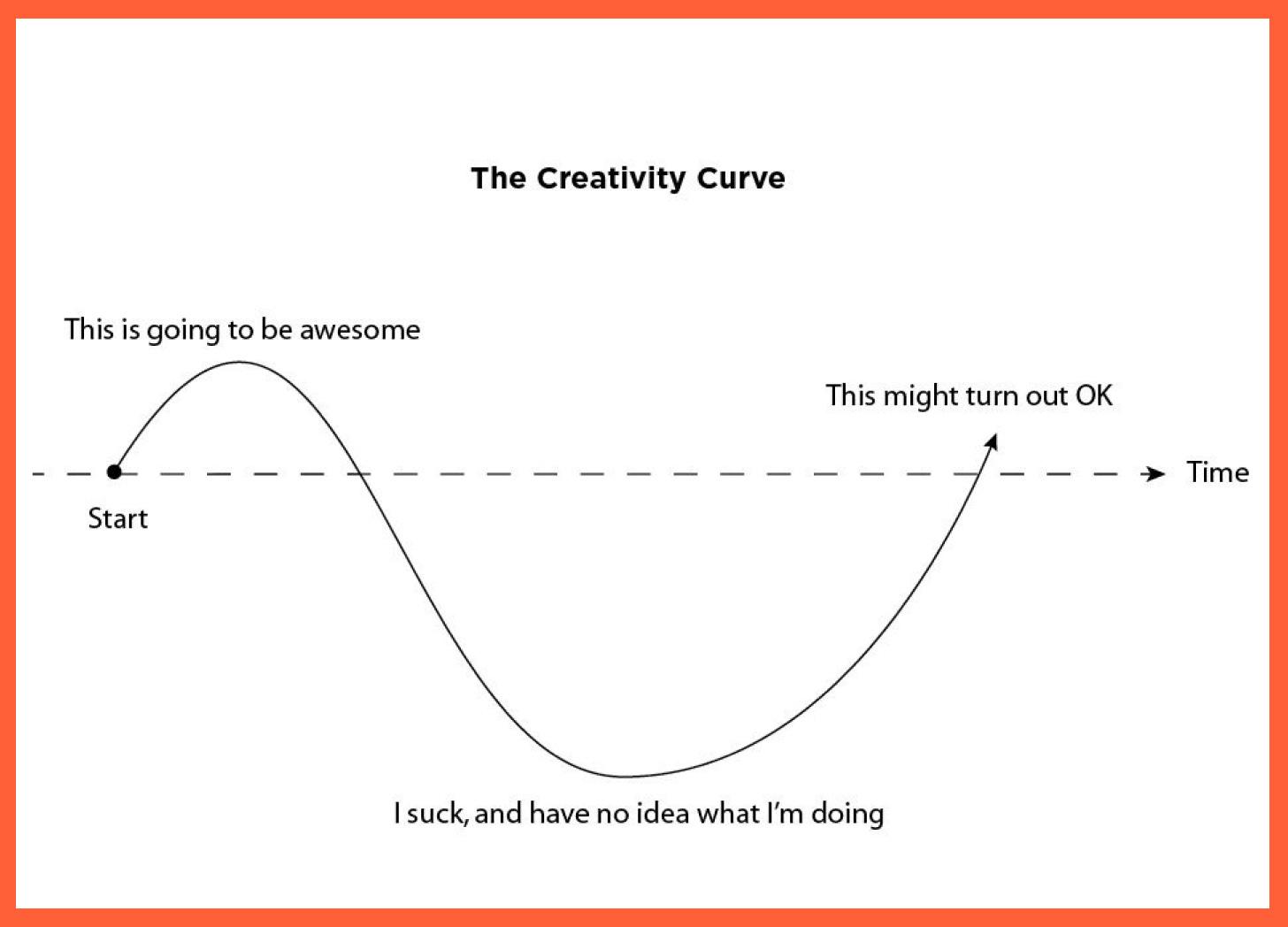
I often think about this in the context of the creative process model. The process of creating anything starts with that familiar excitement of the blank page. Quickly, however, the more you work, research, learn, execute - you enter the dip. The work looks messy and unfinished, and it’s hard to imagine that it’ll turn into anything of value.
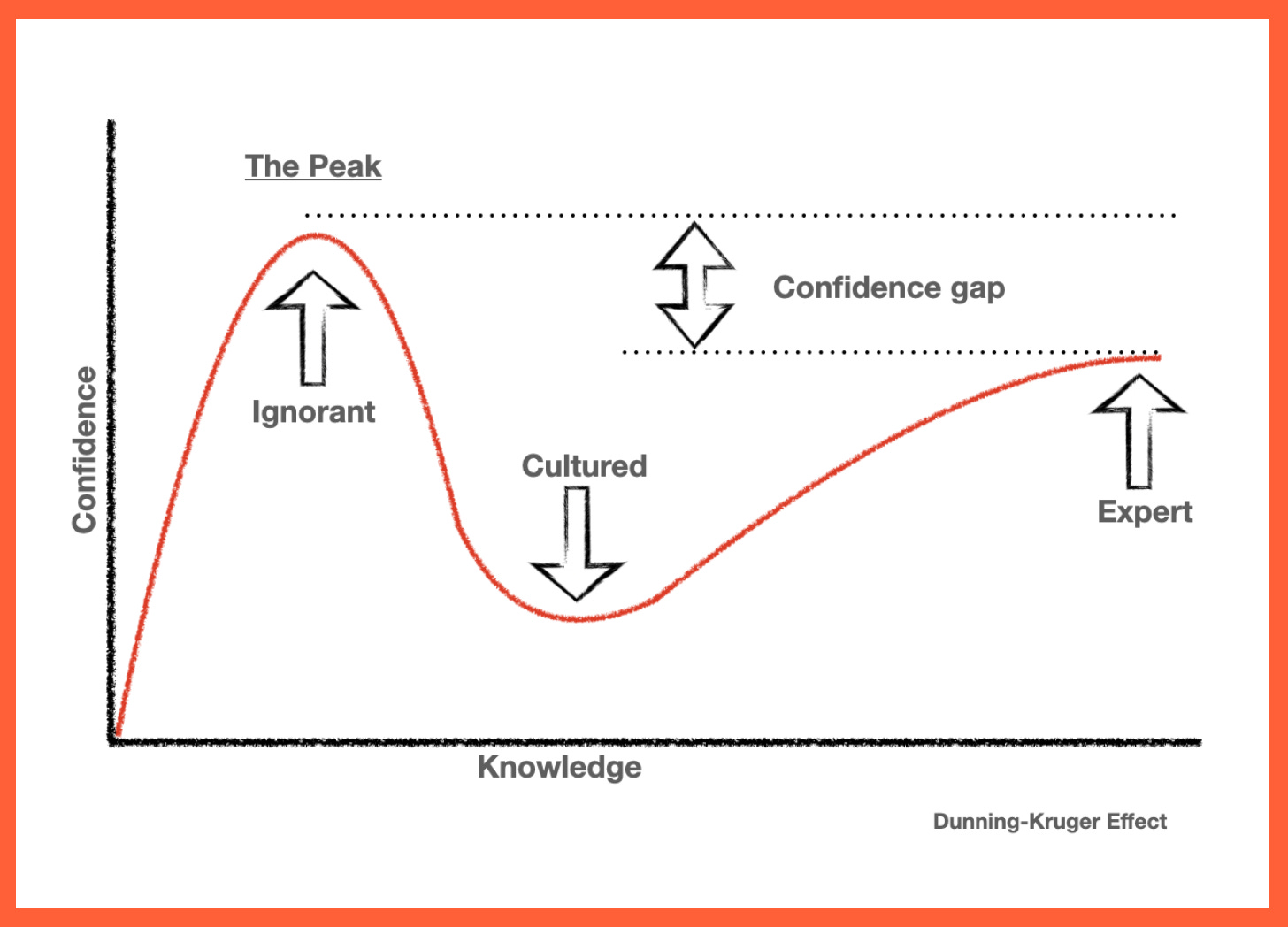
You see a very similar pattern in the Dunning-Kruger effect. The more you know, the more you execute, the more work you realize you have to do in order to execute at the level you think you should. This is the position in which so many of us who are deeply obsessed with our work find ourselves.
Let’s now take a look at the SRA curve or “Stimulus-Recovery-Adaptation model” often referenced in exercise science (exercise science friends, suspend your opinions on the validity of the model below for a minute while I make my point here. 😂)
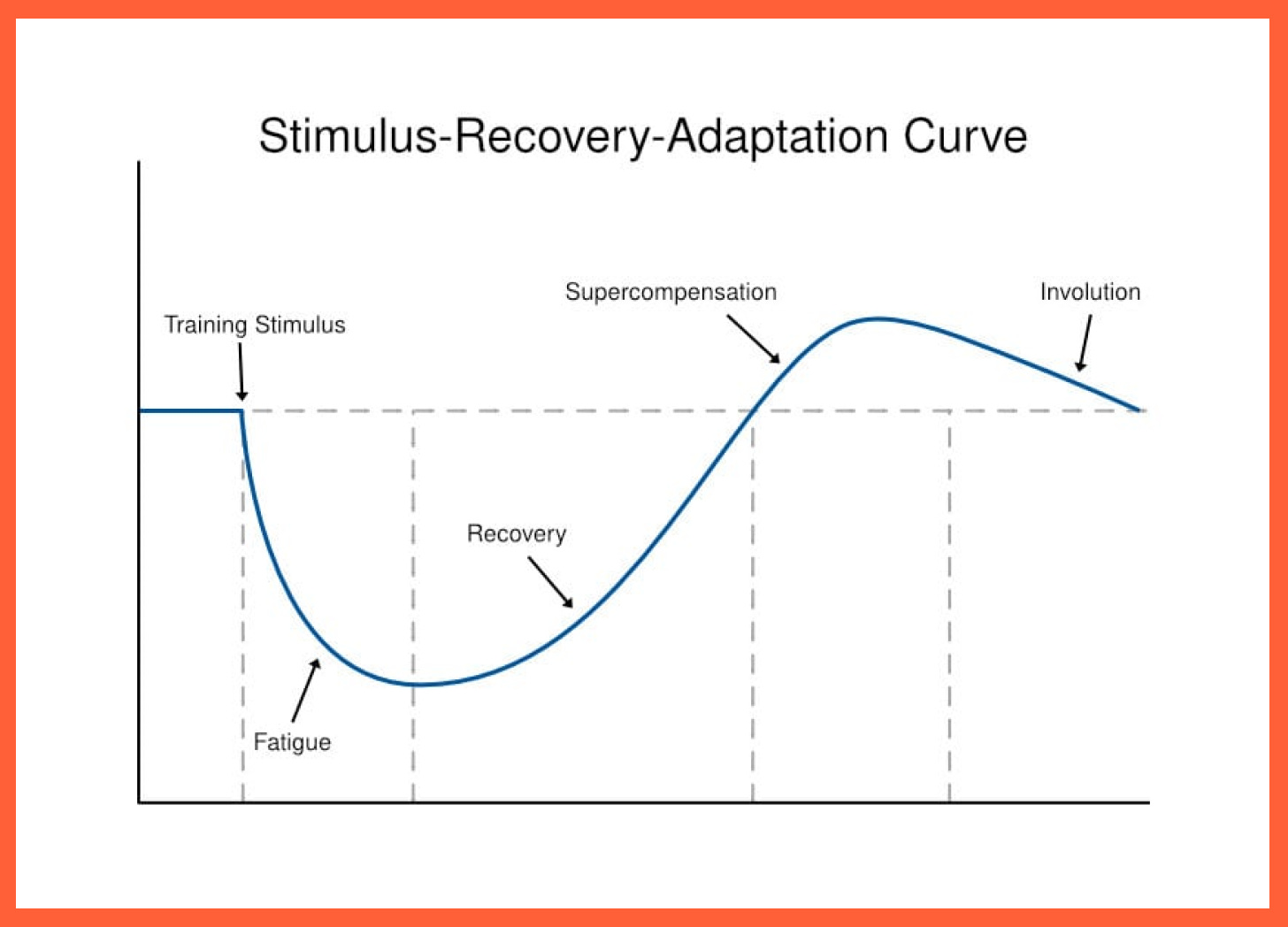
The SRA curve is often referenced to demonstrate the role of training stimulus, recovery, and that adaptation we equate to “getting in shape.”
You can’t bypass a phase to jump to the end result. When you train effectively, you enter the dip into fatigue. You have to prioritize recovery to experience adaptation, and then you repeat the process.
Exert, fatigue, recover, adapt.
Again and again and again.
I firmly believe that sport and art share the same skeleton: discipline, process, repetition, and work that feels invisible until it doesn’t. While you’re in the messy dip of the curve, you’re deep in the work - research, creating. The once blank page in front of you that used to represent possibility and excitement is now filled with your drafts and attempts at work that you know isn’t up to the standard that you can visualize.
But you have to keep creating.
One of my favorite reads on this platform is written by brand strategist, Jasmine Bina. In a recent essay on personal brands she writes,
“…your life will have its winter seasons when you seem to amble alone through hibernating landscapes where nothing grows. Then you will have spring seasons when the world is alive, ideas blossom, and you interact with everyone you see.
Both seasons matter. Every winter and spring season of life has its purpose. The key is to not get stuck in one or the other. Keep cycling between them.”
We so intuitively know the process for growth in our fitness. You can look at your program for next 12 weeks / 12 months and know there will be a point where you hit a plateau if you don’t integrate deloads. You know you’ll feel fatigued at first, but with more reps and rest you’ll adapt and it’ll get easier.
Yet in the fields of our work and creation we don’t hold the same space. There will be times to retreat and refill, and times to keep pushing. There will also be times when the performance we put out into the world doesn’t measure up to what we would like to be doing.
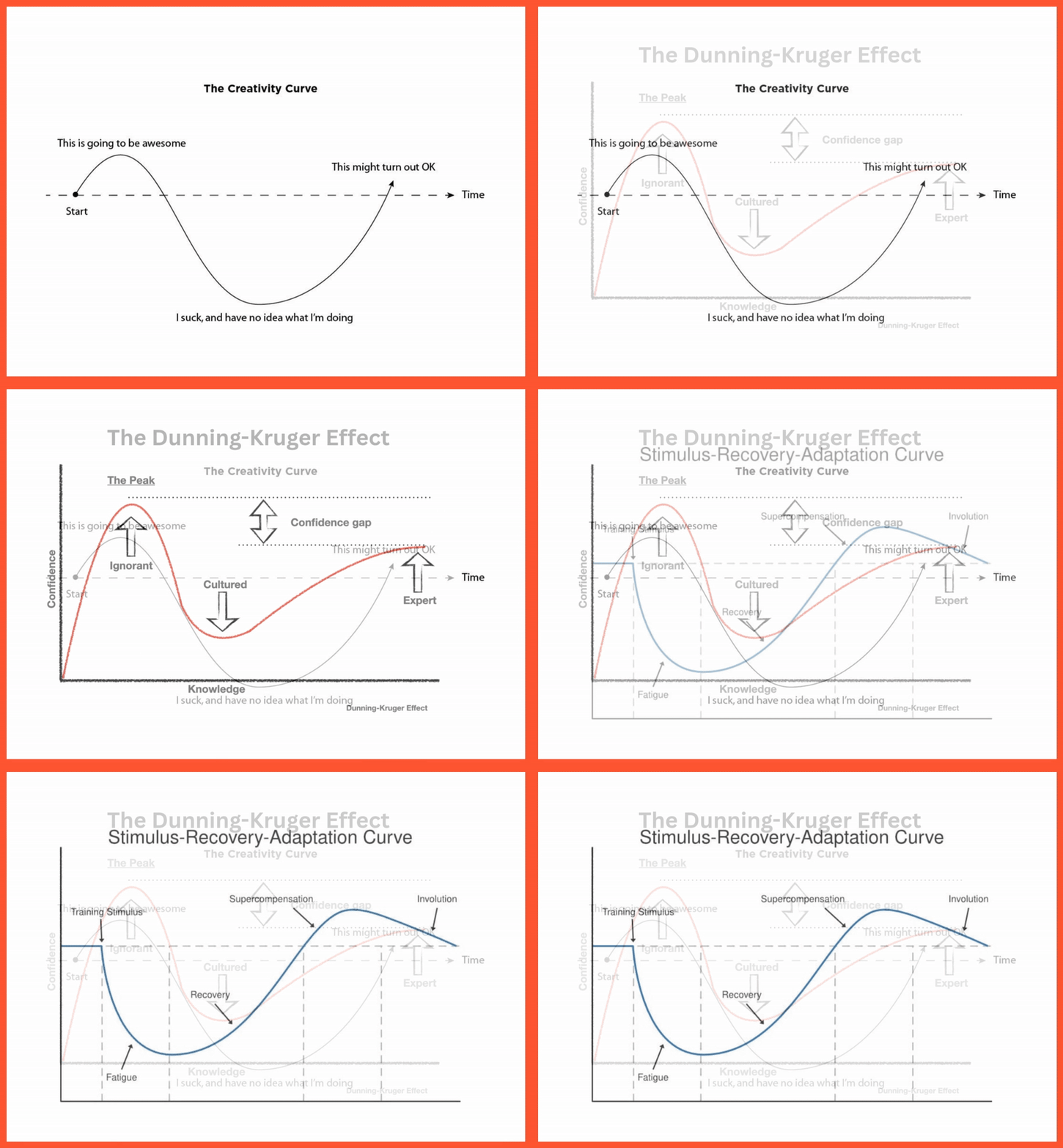
That dip is where I’ve found myself for the past six months. If you’ve been here, welcome. It’s easy to stop pushing once you’ve hit it, isn’t it? Especially if you’re putting in the reps in a public forum as so many of us are.
But that’s what the reps are for.
The best in the world at their crafts have grown comfortable with the uncomfortable cycle of creation. Not every day is game day. Even the best don’t play at peak performance every time. They practice. They shoot, they miss, they adjust, they repeat.
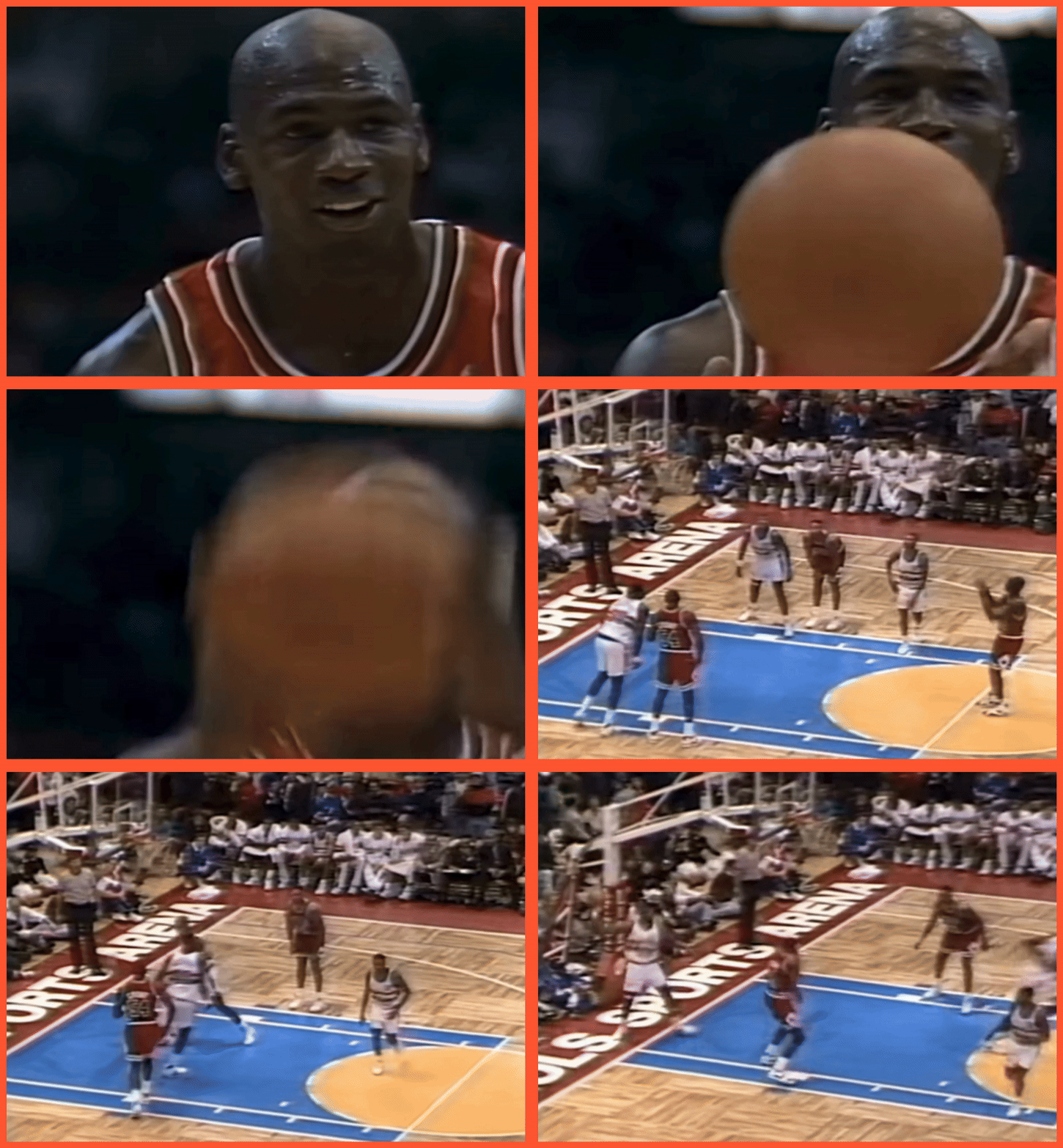
That’s why there’s endless footage of Michael Jordan at the free-throw line.
The tantalizing promise about showing up at the free throw line day in and day out is that you may reach that unquantifiable magic that is “game day.”
That moment where human instinct takes over and magic happens - whether that’s the art that seems to flow out of you like water or an athletic performance you didn’t think was possible (the magic that many refer to as “the flow state.”)
That’s the true connective tissue between art and sport.
I think that’s why, for centuries, societies have gathered around both.
If you’ve found yourself in the dip, join me in continuing to show up at the free-throw line.
Be like Mike, if you will.
Here’s to those who keep showing up to put in the reps,
Tatum Brandt
Closing note:
My favorite conversations are most often with other creatives who are obsessed with sport. One of those conversations was with the photographer and creative-in-sport, Carl Nard. I was telling him about the feeling of being deep inside the “dip” (see again those oversimplified graphs I kicked off this article with) He referenced the concept of reps in public and using these articles as my free-throw practice.
Some of it might hit. Some of it might just be a decent warm-up.
But the point is, I’ll keep showing up to the free-throw line.
Thanks, Carl.
Check out Carl’s incredible work here and also at his role as creative lead and head of creative and community at Freaks of Nature.
💖this one absolutely hit for me. Thank you for sharing Tatum. Showing up on the free throw line right along with you!